

Equine
The Intricacies of Fascia: Connective Tissue and Collagen in Horses
• Megan Bertels

Unveiling Fascia as Connective Tissue
A Dynamic Network
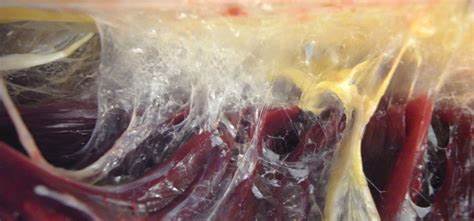
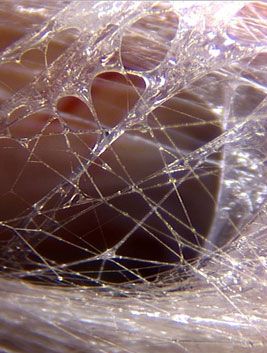
At the heart of equine anatomy lies fascia, an intricate and dynamic network of connective tissue essential to fascial health and overall movement coordination. Often described when discussing fascia in horses, this system forms a three-dimensional web interwoven throughout the body, enveloping muscles, organs, and essential structures. Researchers frequently examine fascia lines in horses to better understand how motion, force distribution, and posture are interconnected.
Functioning as the body's architectural framework, fascia is not merely a passive wrapping but a dynamic contributor to the biomechanics of a horse's movements. Discussions around fascia health in horses often highlight its role in distributing tension evenly across tissues. The cornerstone of fascia's structural integrity is collagen, a protein that serves as the architectural backbone of this complex matrix and is often referenced in conversations about horse collagen support.
Collagen fibers form a resilient scaffolding, providing tensile strength, flexibility, and elasticity to the fascial network. Understanding the central role of collagen is pivotal in grasping the nuanced workings of fascia as connective tissue in horses, particularly when evaluating tight fascia in horses and changes that may occur with training or age.
The Dynamic Synergy: Fascia and Collagen in Equine Physiology
Active Participation in Biomechanics
Fascia, a dense connective tissue enveloping muscles, bones, and organs, significantly influences a horse's biomechanics and is central to discussions about fascia in horses. It serves a pivotal role in coordinating muscle function by creating a network that enables efficient movement during activities like walking, running, and jumping.
Surrounding joints, fascia contributes to stability and mobility, an area often considered alongside a horse joint supplement strategy in broader joint-care conversations. Additionally, fascia acts as a shock absorber, distributing forces and impacts throughout the body, thereby minimizing the potential for injuries related to repetitive stress or sudden impacts.
Fascia plays a crucial part in maintaining posture and balance by influencing the alignment of the spine and supporting a horse's ability to move in a balanced and coordinated manner. As a continuous system, changes within fascia lines in horses may influence distant areas. The fascial system also adapts to exercise and training, with consistent activity encouraging elasticity and balanced tissue response, contributing to long-term fascial health.
Collagen's Multifaceted Contribution
Within the intricate fascial structure, collagen plays a multifaceted role and is frequently discussed in relation to equine collagen joint supplement formulations. Its tensile properties contribute to joint and tissue stability, while its elastic characteristics allow for smooth extension and recoil during motion.
This balance is particularly relevant when considering horse collagen supplement options as part of broader nutritional planning. The relationship between collagen fibers and surrounding tissues illustrates how collagen contributes to tissue organization without implying guaranteed outcomes.
Understanding the Impact: Fascia's Influence on Equine Health
Mobility, Flexibility, and Beyond
The impact of fascia on equine health is far-reaching, particularly concerning mobility and flexibility. Optimal fascial health in horses ensures that horses can execute a full range of motion without stiffness or discomfort. Collagen's presence is instrumental, contributing to the suppleness and resilience of the fascial matrix, thereby enhancing overall mobility.
When fascia becomes restricted or uneven, discussions often reference tight fascia in horses as a factor affecting stride quality or posture. While not diagnostic, recognizing these patterns may guide management decisions and professional evaluations.
Exploring fascial care approaches, including stretching and bodywork, is often paired with nutritional considerations such as horse collagen support, forming a holistic perspective on connective tissue care.
Fascia Examples

Nurturing Optimal Fascial Health: Strategies and Considerations
Collagen-Rich Nutrition
Supplementing your horse with OptiWize 10-N-1 will provide your horse’s body with what it needs to support collagen production, contribute to the robustness and resilience of fascial tissues.
Collagen is a foundational protein within fascia, tendons, and ligaments, making equine collagen joint supplement options a topic of interest for horses involved in demanding disciplines. Nutritional strategies are often considered alongside training intensity, workload, and recovery cycles.
Movement and Conditioning
Engaging horses in regular, varied exercise routines stands as a cornerstone for maintaining fascial health. Dynamic exercise supports tissue adaptability and may help manage patterns associated with tight fascia in horses over time.
Professional Guidance and Interventions
Collaboration with equine professionals can provide insight into posture, movement patterns, and connective tissue balance. Therapists may assess fascia lines in horses to identify asymmetries and recommend tailored conditioning or care strategies. Nutritional guidance may also include discussions around horse collagen supplement selection based on individual needs.
In Conclusion
In conclusion, exploring fascia in horses reveals a complex connective tissue system where collagen plays a central structural role. Understanding how collagen contributes to fascia health in horses allows equestrians to make informed care decisions that support movement, comfort, and long-term performance considerations. When combined with thoughtful training, professional input, and nutrition planning, including options such as OptiWize 10-N-1, horse owners can take a balanced approach to supporting connective tissue integrity without relying on definitive claims.